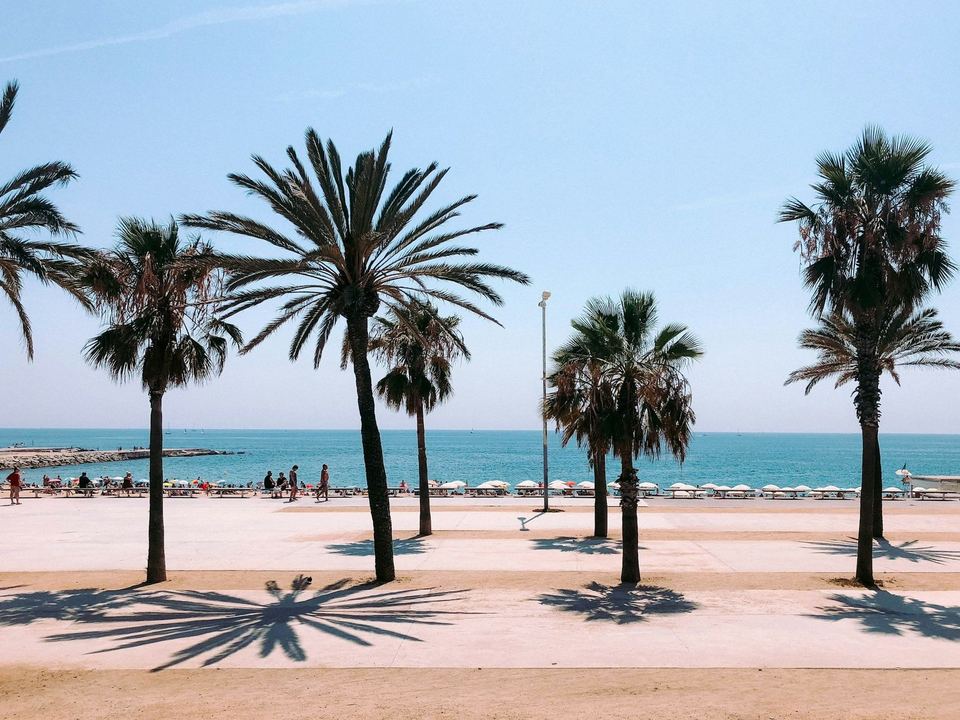
a sample plan, 10 days
10 days in Barcelona, with three day trips
Ten days lets you see Barcelona at a relaxed pace and still get out of the city. This plan keeps one hotel for the whole trip and reaches the day trips by train, so you never need a car.
Quick answer: Spend seven days in Barcelona: the Gothic Quarter and El Born, Sagrada Família and Sant Pau, Passeig de Gràcia, Park Güell and Gràcia, Montjuïc, the beach and Poblenou. Add three day trips by train: Montserrat, Girona, and Sitges or Tarragona. Stay in the Eixample, book Gaudí sites ahead and get around by metro.
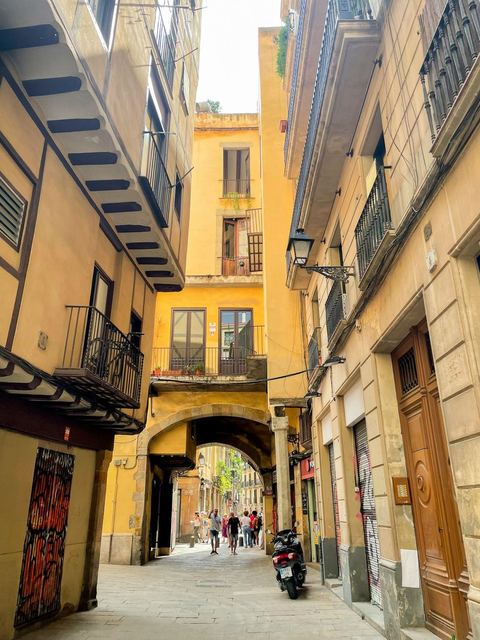
Gothic Quarter, day 1 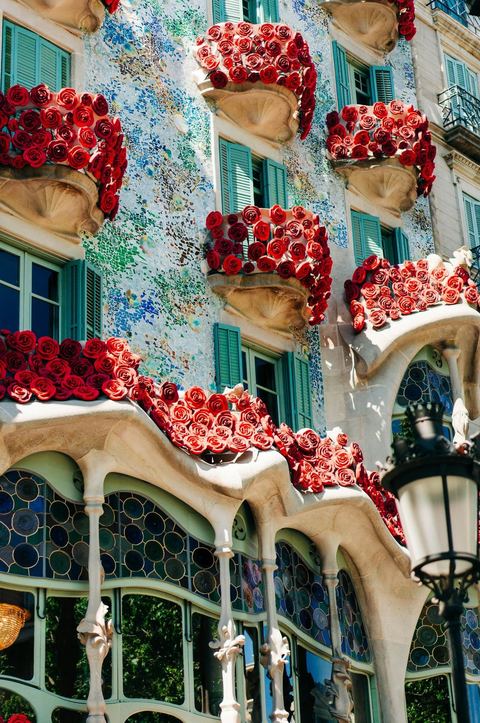
Casa Batlló, day 3 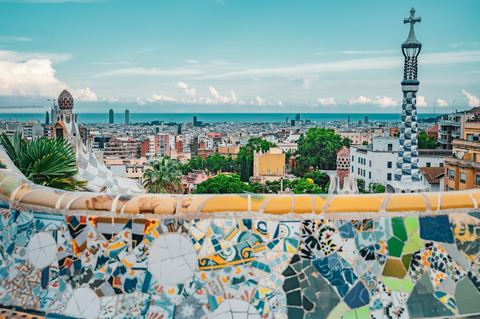
Park Güell, day 4
Sample itinerary. This plan shows the format and level of detail of a VanSledright Travel itinerary. Opening hours, prices, train times and booking rules change, so confirm the details with each provider before you book.
Where should you stay in Barcelona?
Stay in the Eixample, the grid of wide streets north of the old city. It’s central, with Passeig de Gràcia, Gaudí’s houses and good metro and train links, and it’s an easy base for the day trips. Choose somewhere close to a metro station on lines 2, 3 or 5, or to Passeig de Gràcia station.
For more atmosphere and narrower streets, El Born in the old city is lively and full of restaurants, though it can be noisy at night. Gràcia feels like a village of small squares and suits a slower trip.
How do you get around Barcelona?
Walk and take the metro. Barcelona’s metro and buses, run by TMB, reach everything in the city part of this plan, and a multi-journey card is usually better value than single tickets. Check current fares and passes before you buy.
From the airport, the Aerobús express bus runs to Plaça de Catalunya, and the L9 Sud metro line serves both terminals. Standard single tickets don’t cover the airport metro stations, so check the fare first. The R2 Nord train runs from Terminal 2. Keep your phone and wallet secure on crowded trains.
Day 1: La Rambla, the Gothic Quarter and El Born
Morning. Start early at La Boqueria market, just off La Rambla, before the crowds. Walk down La Rambla, then into the Gothic Quarter: Plaça Reial with its lamp posts designed by a young Gaudí, Plaça Sant Jaume, and Barcelona Cathedral with its cloister.
Afternoon. Cross Via Laietana into El Born. See Santa Maria del Mar, a 14th-century church in Catalan Gothic style, then the Picasso Museum on Carrer de Montcada. Book a timed ticket for the museum.
Evening. Dinner in Barcelona is late, often from 9pm. Have tapas or vermut in El Born, and try pa amb tomàquet, bread rubbed with tomato and olive oil.
Day 2: Sagrada Família and Sant Pau
Morning. Visit the Basílica de la Sagrada Família, Gaudí’s unfinished masterpiece, on a timed ticket booked well ahead. A morning slot often gets the best light through the stained glass on the east side. Consider adding a tower visit, booked with your ticket.
Afternoon. Walk up Avinguda de Gaudí to the Recinte Modernista de Sant Pau, a former hospital complex designed by Lluís Domènech i Montaner and a UNESCO World Heritage Site. Its pavilions, tiles and gardens are usually much quieter than the basilica.
Evening. Head to Gràcia for dinner. Its small squares, such as Plaça del Sol and Plaça de la Virreina, fill with people on warm evenings.
Day 3: Passeig de Gràcia and the Palau de la Música
Morning. Walk Passeig de Gràcia, the Eixample’s grand avenue. Visit Casa Batlló, Gaudí’s remodelled house with its curving, colourful façade, and see Casa Amatller next door. Book timed tickets online.
Afternoon. Continue up the avenue to Casa Milà, known as La Pedrera, and its sculpted rooftop. Later, head to the old city for a guided tour of the Palau de la Música Catalana, a concert hall famous for its stained-glass ceiling.
Evening. If you can, see a concert at the Palau de la Música; the hall is at its best with music playing. Otherwise, have dinner in the Eixample.
Day 4: Park Güell and Gràcia
Morning. Take the metro or bus up to Park Güell and enter the Monumental Zone on a timed ticket. See the dragon stairway, the hypostyle hall and the long, tiled bench on the main terrace, with views over the city to the sea. The rest of the park, outside the Monumental Zone, is good for a walk.
Afternoon. Walk down into Gràcia and visit Casa Vicens, Gaudí’s first major house, now open as a museum. Then wander Gràcia’s streets for independent shops, cafés and squares.
Evening. Have a relaxed dinner in Gràcia or go back to your hotel to rest. Tomorrow involves some climbing.
Day 5: Montjuïc and Poble-sec
Morning. Take the funicular from Paral·lel metro station up Montjuïc, then the cable car to Montjuïc Castle for views over the port. Walk downhill to the Fundació Joan Miró, a museum dedicated to the Catalan artist in a building designed by Josep Lluís Sert.
Afternoon. Continue to the Museu Nacional d’Art de Catalunya (MNAC) in the Palau Nacional, known for its Romanesque church murals, and walk past the 1992 Olympic stadium area. The steps in front of the Palau Nacional give a classic view down to Plaça d’Espanya.
Evening. Walk down into Poble-sec and eat pintxos along Carrer de Blai, a street of small bars where you pay by the skewer.
Day 6: Day trip to Montserrat
Morning. Take the R5 train from Plaça d’Espanya station toward Manresa. For the rack railway (the Cremallera), get off at Monistrol de Montserrat; for the cable car, get off at Montserrat-Aeri. Combined train and mountain tickets are sold at Plaça d’Espanya. Go early to beat the coach groups.
Afternoon. Visit the Benedictine monastery and its basilica, home to La Moreneta, the Black Madonna. If the boys’ choir, the Escolania, is singing that day, it’s worth timing your visit for it. Then take a funicular higher up and walk one of the mountain trails among the rock pinnacles.
Evening. Return to Barcelona and have a quiet dinner near your hotel.
Day 7: The beach, Ciutadella and the port
Morning. Walk through Parc de la Ciutadella, past its monumental fountain, and under the Arc de Triomf. Then head down to Barceloneta, the old fishermen’s quarter by the sea.
Afternoon. Have a long seafood lunch: arròs negre (black rice with squid ink) or a seafood paella, which is traditionally a lunchtime dish. Spend the rest of the afternoon on the beach or walking the seafront promenade toward Port Olímpic.
Evening. Watch the sunset by the water, then have dinner in Barceloneta or back in El Born.
Day 8: Day trip to Girona
Morning. Take a high-speed or regional train from Barcelona Sants to Girona; the fast trains take well under an hour. Walk from the station to the river Onyar and its row of colourful houses, then climb the wide stone steps to Girona Cathedral.
Afternoon. Walk the old city walls (the Passeig de la Muralla) for views over the rooftops, and explore the narrow lanes of the Call, the medieval Jewish quarter, and its museum.
Evening. Return to Barcelona. If you’d like a longer day, continue from Girona to Figueres to see the Dalí Theatre-Museum, and come back later.
Day 9: Day trip to Sitges or Tarragona
Morning. Choose one. For a beach town, take the R2 Sud train from Passeig de Gràcia or Sants to Sitges, with a whitewashed old town and a church on the seafront. For history, take a train south to Tarragona, the Roman city of Tarraco, now a UNESCO World Heritage Site.
Afternoon. In Sitges, spend the afternoon on the beaches along the promenade. In Tarragona, see the Roman amphitheatre above the sea, the circus vaults and the walk along the old walls.
Evening. Return to Barcelona for dinner. If you went to Sitges, stay for sunset before the train back.
Day 10: Sant Antoni and Poblenou
Morning. Visit the Mercat de Sant Antoni, a restored 19th-century market hall in the Eixample, and have breakfast nearby. If you’re there on a Sunday morning, its book and collectors’ market fills the streets around the hall.
Afternoon. Take the metro to Glòries for a look at Torre Glòries, then head into Poblenou, a former industrial area, and walk the Rambla del Poblenou down to the beach at Bogatell. Check whether the Els Encants flea market by Plaça de les Glòries is open that day.
Evening. Have a last dinner back in the city centre, and leave time to pack and get to the airport.
When is the best time to visit Barcelona?
Late spring (May and June) and early autumn (September and October) are the most comfortable, with warm days, a swimmable sea by June and fewer crowds than midsummer. July and August are hot and very busy, and some local businesses close for part of August.
Winter is mild and quiet, with the shortest queues at the major sights, though it’s too cold for the beach. Check local holidays before you go: on some, such as the city’s La Mercè festival in September, the city is full of events, and museums may change their hours.
What should you book ahead in Barcelona?
Book these as soon as your dates are fixed:
- Sagrada Família, and a tower visit if you want one.
- Park Güell’s Monumental Zone, for a timed entry.
- Casa Batlló and La Pedrera.
- The Picasso Museum, for a timed slot.
- A Palau de la Música tour or concert.
- High-speed train tickets to Girona, if you want a specific train.
Want a Barcelona plan built for your trip?
This sample is written for two adults on a first visit. A custom plan starts from your own dates, budget and interests: a family trip, more food and wine, Barcelona combined with Madrid or the Costa Brava, or a trip that skips the busiest sights.
A custom itinerary for a trip of 8 to 14 days is $249. Send your details through the form below and we’ll confirm the plan and the price by email before you pay anything. See pricing for shorter trips.
Common questions
Is 10 days too long for Barcelona?
Not if you use some of it outside the city. Seven days in Barcelona lets you see the main sights without rushing, and day trips to Montserrat, Girona and the coast add mountains, a medieval old town and a smaller beach town. If you’d rather see more of Spain, swap the day trips for a few nights in Valencia or Madrid.
Do you need to book Sagrada Família in advance?
Yes. Entry is by timed ticket, and slots sell out days or weeks ahead in busy months, so book on the basilica’s official website as soon as your dates are fixed. The same applies to Park Güell’s Monumental Zone, Casa Batlló and La Pedrera. Buy from the official sites to avoid resellers’ markups.
Is Barcelona safe for tourists?
Barcelona is generally safe, but pickpocketing is common in crowded places, especially on La Rambla, in the metro and at the busiest sights and beaches. Keep your phone and wallet in a zipped front pocket or bag, don’t hang a bag on the back of a chair, and keep valuables out of sight on the beach.